

Explore White Oak!
Why White Oak is Trending
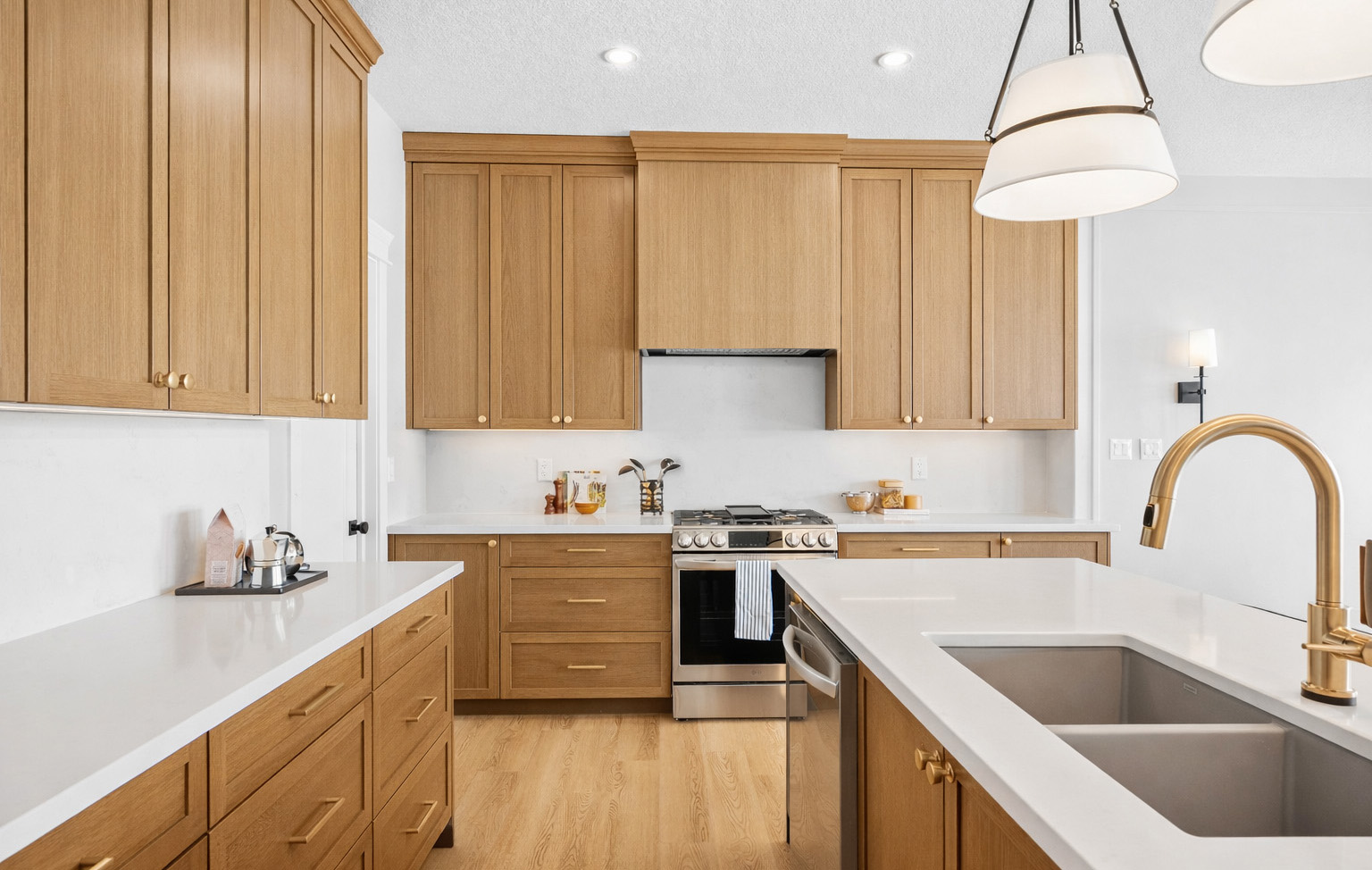
Natural warmth. As kitchen and bath design embraces organic textures, wood stain doors are making a strong comeback, and White Oak's authentic grain is front and center. It bridges the gap between clean modern minimalism and cozy, natural warmth.
A finish for every style. From light, natural tones to deeper, moodier stains, White Oak suits modern, transitional and traditional designs alike. It takes stains and natural matte or water-based sealants cleanly without looking muddy or overly amber.
Built to last. As a dense hardwood with closed cellular structures, it resists moisture, daily wear and warping better than other softer wood species. At 1,360 lbf on the Janka hardness scale, White Oak resists dents better than Cherry or Walnut.
Designer appeal. Designers and architects continue to specify it for residential kitchens and commercial interiors. White Oak acts as a chameleon in design, fitting seamlessly into modern organic and transitional aesthetics.
Flat Cut vs Rift Cut: Same Species, Different Look
How the log is sawn decides the grain your customer sees. Knowing the difference helps you match the cut to the design.
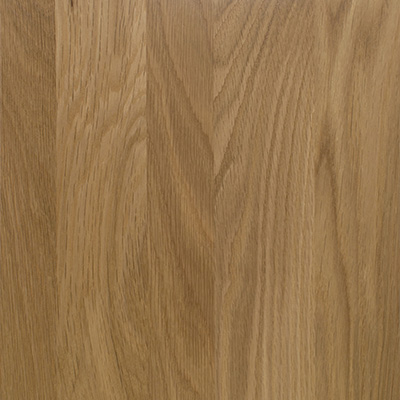 | 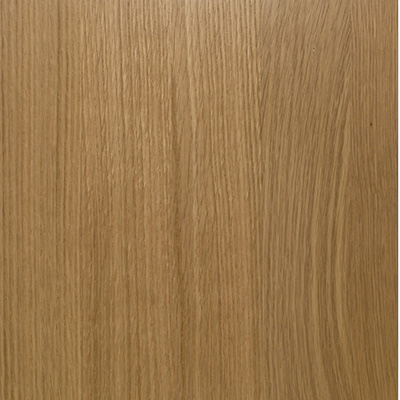 |
Flat Cut Broad, sweeping cathedral arches and natural wood grain movement. A classic, expressive grain that suits traditional and transitional shaker styles. Our Flat Cut Select is our standard white oak grade: fairly uniform, well-matched color, with moderate variation between doors and a few small pin knots. Ideal for light to medium stains. | Rift Cut Cut at an angle to the growth rings for a tight, straight, linear grain with minimal fleck. The calm, uniform look behind many modern and contemporary designs. Our Rift Cut Select keeps color fairly uniform and well matched, with limited grain variation. Because the cut yields less usable board, rift is typically the premium option. |
Stains that Showcase White Oak
How the log is sawn decides the grain your customer sees. Knowing the difference helps you match the cut to the design. See more White Oak stain finishes.
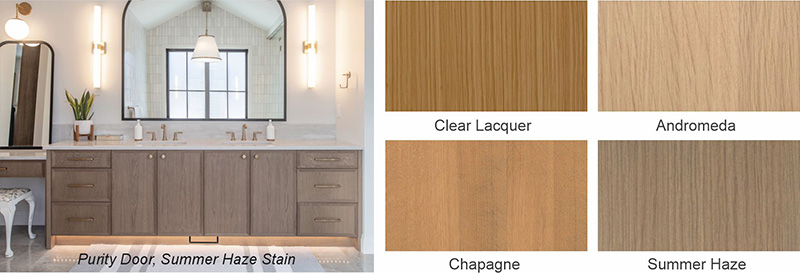 |
Light / Natural Stain Finishes A light, natural stain on white oak keeps the wood looking close to the original color. It adds only a little depth and doesn't add much color. The wood stays pale, from a soft cream to a light tan. Many light stains have a slight neutral-to-warm beige cast. |
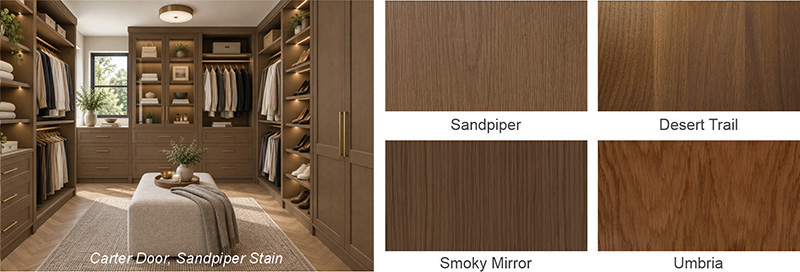 |
Medium Stain Finishes Medium stains on white oak give the wood a richer, more grounded look. The grain stays visible, and the color is noticeably deeper than a natural finish. Colors run from golden honey and warm tan to soft walnut and chestnut brown. Neutral and cooler browns are very popular. They work well on white oak because they tone down its natural yellow cast. Deeper warm browns lean toward a classic, traditional look. |
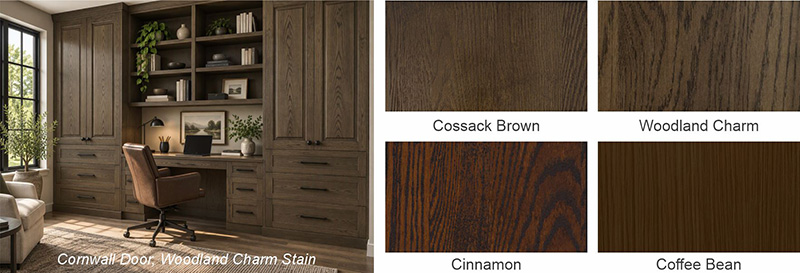 |
Dark Stain Finishes Dark stains on white oak create a more dramatic, high-contrast look. The wood takes on deep color while the grain stays visible. Colors range from rich espresso and dark walnut to deep chocolate, charcoal-brown, and near-black ebony. Cooler dark browns and black-brown tones suit modern designs. Warmer dark browns, such as mahogany-leaning or coffee tones, feel more traditional. White oak's natural tannins can add a subtle depth to the color. |
Door Styles that Showcase White Oak
White oak suits nearly every style, but the door profile and grain cut can change whether it reads modern, transitional, or traditional. See more White Oak door style Samples. Note: Any wood door style can be manufactured in White Oak.
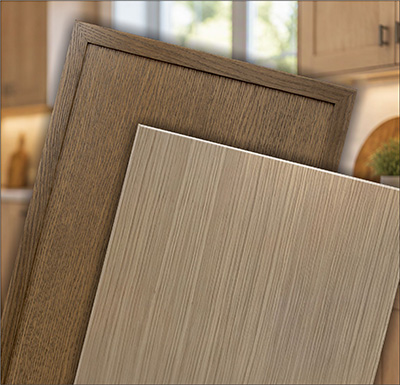 | Contemporary / Modern Straight, linear grain that looks clean and architectural. Slab and slim shaker door styles provide minimal profile to compete with the grain and creates clean lines with minimalist appearance. Some designs combine both slab and slim shaker door styles. This adds contrast while the shared clean lines keep the kitchen cohesive. | |
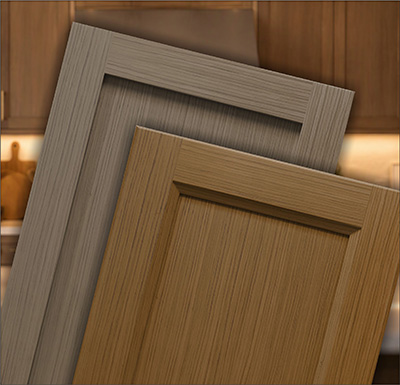 | Transitional The most versatile choice that is simple enough for modern spaces and has enough structure for traditional ones. This style blends the warmth and detail of traditional with the clean lines of modern design. The result is a look that feels timeless without being fussy or stark. Door styles are typically shaker or recessed panel with little ornamentation. | |
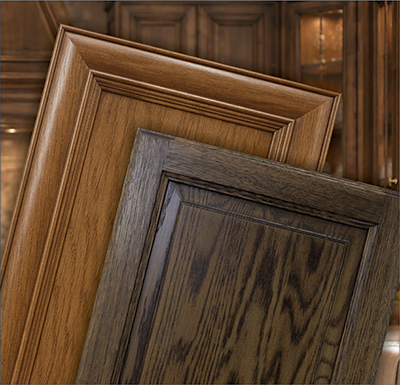 | Traditional Draws on classic, formal styling and emphasizes craftsmanship, warmth and visible detail. Doors are typically raised-panel, cathedral or recessed-panel styles with wider frames, often finished with decorative profiles, beaded edges or applied moldings. The profiles and grain often provide a furniture-like appearance that screams luxury cabinetry. |
